
How to Choose the Right Distribution Transformer?
An electrical transformer is an integral part of the proper functioning of any electrical device or machine, especially if the supply voltage is not the same as the operating voltage of the device. Not every transformer can be used for every machine and every voltage. There are many different types of transformers, such as auto, power, step-up, and each has a specific application.
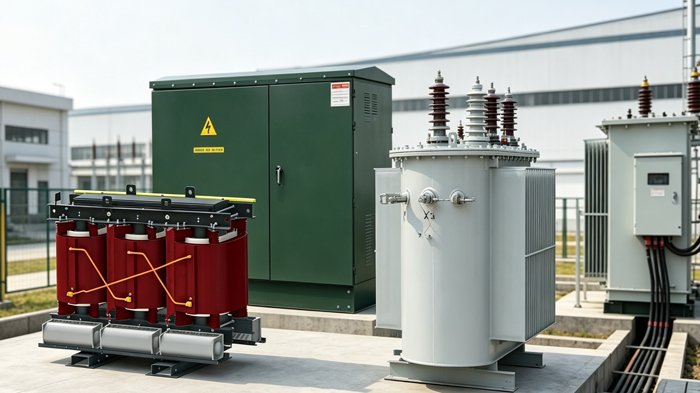
Choosing the right transformer depends on several factors, including installation environment, power distribution method, safety requirements, maintenance needs, and operating conditions. The three most common types are:
- Pad Mounted Distribution Transformer – for underground distribution systems
- Pole Mounted Distribution Transformer – for overhead distribution systems
- Dry Type Distribution Transformer – for indoor and safety-critical applications
1. Understand Your Installation Environment
The first step is determining where and how the transformer will be installed.Outdoor Underground Applications → Pad Mounted DTR Transformer
Choose a pad mounted distribution transformer when the power system uses underground cables. Typical environments:- Residential communities
- Commercial buildings
- Shopping centers
- Industrial parks
- Urban distribution networks
- ✔ Compact ground-level installation
- ✔ Safe enclosed design
- ✔ Suitable for public areas
- ✔ Better appearance compared with overhead equipment
- ✔ Easy integration with underground cable systems
Outdoor Overhead Applications → Pole Mounted DTR Transformer
Choose a Pole Mounted Distribution Transformer when power is delivered through overhead lines.Typical environments:
- Rural areas
- Suburban communities
- Agricultural facilities
- Remote locations
- ✔ Lower installation cost
- ✔ Requires minimal ground space
- ✔ Easy deployment for overhead networks
- ✔ Suitable for long-distance distribution lines
Indoor Industrial & Commercial Applications → Dry Type DTR Transformer
Choose a 3 Phase dry type distribution transformer when the transformer is installed inside buildings or locations requiring high safety standards.Typical environments:
- Factories
- Hospitals
- Data centers
- Office buildings
- Transportation facilities
- ✔ No transformer oil required
- ✔ Excellent fire safety performance
- ✔ Environmentally friendly
- ✔ Suitable for indoor installation
- ✔ Lower risk of oil leakage
2. Pad Mounted vs. Pole Mounted vs.Dry Type Distribution Transformer
| Selection Factor | Pad Mounted Distribution Transformer | Pole Mounted Distribution Transformer | Dry Type Distribution Transformer |
| Installation Location | Outdoor ground | Outdoor pole | Indoor / protected areas |
| Distribution System | Underground cables | Overhead lines | Building power systems |
| Main Application | Residential & commercial | Utility & rural distribution | Industrial & commercial facilities |
| Space Requirement | Medium | Very small | Medium |
| Safety Level | High | Medium | Very High |
| Fire Risk | Medium | Medium | Low |
| Maintenance Access | Easy | More difficult | Easy |
| Weather Protection | Excellent | Excellent | Depends on installation |
| Noise Control | Moderate | Moderate | Better |
| Environmental Protection | Good | Good | Excellent |
| Initial Cost | Medium | Low | Higher |
3. Consider Distribution Transformer Capacity Requirements
Before purchasing, determine:1. Load Capacity (kVA Rating)
The transformer size should match the expected electrical load.
Common ratings include:
- 25 kVA
- 50 kVA
- 75 kVA
- 100 kVA
- 250 kVA
- 500 kVA
- 1000 kVA and above
- Number of connected devices
- Motor loads
- Lighting systems
- Future expansion requirements
2. Voltage Requirements
Confirm:
Primary Voltage (Input)
Examples:
- 4.16 kV
- 7.2 kV
- 12.47 kV
- 13.8 kV
- 24.9 kV
- 34.5 kV
Examples:
- 120/240 V
- 208Y/120 V
- 480Y/277 V
- 600 V
4. Oil Filled vs. Dry Type Dist Transformer Selection
| Feature | Oil Filled Dist Transformer | Dry Type Dist Transformer |
| Cooling Medium | Transformer oil | Air / Resin |
| Installation | Mainly outdoor | Mainly indoor |
| Fire Safety | Standard | Excellent |
| Maintenance | Requires oil inspection | Lower maintenance |
| Size | More compact | Usually larger |
| Cost | Lower | Higher |
| Best Application | Utility distribution | Buildings & safety-critical areas |
5. Application-Based Recommendation
| Application | Recommended Distribution Transformer |
| Residential subdivision | Pad Mounted Distribution Transformer |
| Underground city power network | Pad Mounted Distribution Transformer |
| Rural electrical distribution | Pole Mounted Distribution Transformer |
| Agricultural facilities | Pole Mounted Distribution Transformer |
| Factory power supply | 3 Phase Dry Type Distribution Transformer |
| Hospital electrical system | 3 Phase Dry Type Distribution Transformer |
| Data center power distribution | 3 Phase Dry Type Distribution Transformer |
| Commercial building | Pad Mounted or Dry Type Distribution Transformer |
6. Important Questions Before Buying
Before selecting a distribution transformer, confirm: Electrical Specifications- ✓ What is the required kVA rating?
- ✓ What are the primary and secondary voltages?
- ✓ Single phase or three phase?
- ✓ Required frequency (50Hz or 60Hz)?
- ✓ Indoor or outdoor installation?
- ✓ Underground or overhead distribution?
- ✓ Available installation space?
- ✓ Environmental conditions?
- ✓ Is fire protection important?
- ✓ Are there restrictions on transformer oil?
- ✓ Are noise levels limited?
- ✓ CE standards
- ✓ ANSI standards
- ✓ IEC standards
- ✓ UL requirements (where applicable)
7. Final Buying Recommendation
| Your Requirement | Best Choice |
| Clean outdoor installation with underground cables | Pad Mounted Distribution Transformer |
| Low-cost outdoor utility distribution | Pole Mounted Distribution Transformer |
| Indoor installation with high safety requirements | 3 Phase Dry Type Distribution Transformer |
| Urban commercial projects | Pad Mounted Transformer |
| Industrial facilities | 3 Phase Dry Type Transformer |
| Rural and remote power networks | Pole Mounted Transformer |
Choosing the right distribution transformer ensures safe operation, reliable power delivery, lower maintenance costs, and longer service life. A proper selection should always consider the electrical load, installation environment, and future expansion requirements.
 sales@steptransformer.com

 BLDG A, MiXc Xiufeng,
Guilin China
BLDG A, MiXc Xiufeng,
Guilin China